Review: Christmas Goose Trio Embroidery for Makers
As a designer who spends more time staring at stitch simulations than I care to admit, I have learned that not every festive graphic translates well to thread. Some designs look charming on a screen but turn into a tangled mess of puckered fabric once the needle hits the hoop. When I first loaded the Christmas Goose Trio Embroidery file into my software, I was looking for that specific balance of whimsy and technical feasibility. I needed a design that could hold its own on a commercial product without requiring hours of trimming or excessive stabilizer use.
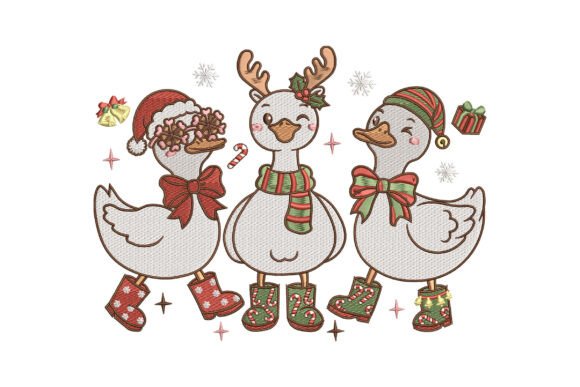
The initial impression is one of playful nostalgia. The layout features three geese, likely arranged in a way that suggests movement or familial connection, which is a classic motif for the holiday season. Unlike overly complex scenes that rely on thousands of tiny stitches to convey detail, this design appears to prioritize shape and silhouette. For an embroidery project, this is often a winning strategy. It means the visual impact remains strong even from a distance, making it ideal for items like tote bags or sweatshirts where the viewer might be standing a few feet away.
Real-World Application: The Holiday Tote Test
To truly evaluate a machine embroidery design, you have to take it off the screen and put it on fabric. I decided to test this design on a heavy-weight canvas tote bag, a staple item for any Etsy seller or craft business during the fourth quarter. The goal was to create a durable, stylish accessory that could serve as both a personalized gift and a piece of boutique merchandise.
The Christmas Goose Trio Embroidery performed surprisingly well on the textured surface of the canvas. Because the design relies on bold shapes rather than microscopic details, the texture of the fabric did not interfere with the clarity of the image. I used a cut-away stabilizer to ensure the weight of the stitching did not distort the bag’s structure. The result was a crisp, professional-looking tote bag design that felt substantial and high-quality. Customers often judge a handmade product by its finish, and this design lends itself to a clean presentation that builds trust.
Versatility Across Product Lines
One of the strongest assets of this design is its adaptability. While it shines on home decor, its potential extends into custom apparel and accessories. Imagine this trio stitched onto the chest of a crewneck sweatshirt. The sweatshirt embroidery market is saturated with generic snowflakes, so offering a character-driven design like this can help a small shop product stand out. The geese provide a narrative element that appeals to buyers looking for something with personality.
For those interested in baby embroidery, this design could be scaled down for a onesie or a nursery blanket. However, caution is required here. When resizing, always check the stitch density. If the original file is dense, shrinking it too much can cause the stitches to bunch up, creating a stiff patch that might irritate sensitive skin. Always run a test stitch on scrap fabric similar to your final material before committing to a customer order.
The design also works well for embroidered patch creation. Patches are a trending item in the digital embroidery file community because they allow buyers to add flair to jackets and hats without permanent commitment. If you plan to sell patches, ensure you use a tear-away or water-soluble backing depending on your application method. The bold lines of the geese should translate clearly to a patch format, provided the edges are finished with a tight satin stitch or a merrowed border if your machine supports it.
Technical Considerations for Designers
From a technical standpoint, there are areas where you need to exercise judgment. The description mentions embellishing t-shirts and towels, which implies the design is versatile. However, thread colors play a massive role in the final outcome. On a white towel, high-contrast threads will make the geese pop. On a dark navy sweatshirt, you might need to adjust the color palette or add an underlay to prevent the fabric from showing through the fill stitch areas.
If you are working with stretchy fabrics, such as jersey knits for t-shirts, the stability of the design is crucial. A design with large solid areas can sometimes cause pulling if not properly stabilized. I recommend using a hoop size that comfortably fits the entire design with at least an inch of margin on all sides. Crowding the hoop can lead to misalignment, especially if the machine has to jump frequently between the three figures in the trio.
Another factor is the type of stitch used. While I cannot see the exact file structure without loading it, typical designs of this nature use a combination of running stitch for outlines and satin stitch for finer details like beaks or eyes. If the design includes tiny text or intricate feather details, inspect these closely in your software. Tiny elements can easily get lost or break during washing if they are not robust enough. For a holiday embroidery piece that might be washed repeatedly, durability is key.
Commercial Viability and Branding
For commercial embroidery professionals, the licensing terms are the first thing to check. Before selling any finished product or using this in a client project, confirm the license included with the embroidery file. Most designers offer different licenses for personal versus commercial use. Assuming you have the correct rights, this design offers good value because it is seasonal yet timeless enough to be reused annually.
When creating printable mockup images for your online store, remember that lighting and angle matter. Show the design on different backgrounds to help buyers visualize it in their homes. A Christmas themed item sells best when it evokes warmth and tradition. The goose motif taps into rural, cozy aesthetics that are very popular in current home decor trends. This helps with brand consistency if your shop focuses on rustic or farmhouse styles.
Final Verdict for Makers
The Christmas Goose Trio Embroidery is a solid addition to any designer’s library. It avoids the pitfalls of over-complication while delivering a clear, charming visual message. It is particularly well-suited for medium to large hoop projects where the details can breathe. Whether you are creating design assets for a digital shop or stitching physical goods for a craft fair, this design offers the reliability and aesthetic appeal needed to satisfy discerning customers.
Remember to always test on your specific machine and fabric combination. What works on my industrial multi-needle might behave differently on a single-needle home machine. Check your tension, use quality thread, and do not skip the test stitch. With proper preparation, this design can elevate your embroidery project from a simple craft to a professional-grade product that customers will cherish for seasons to come.